
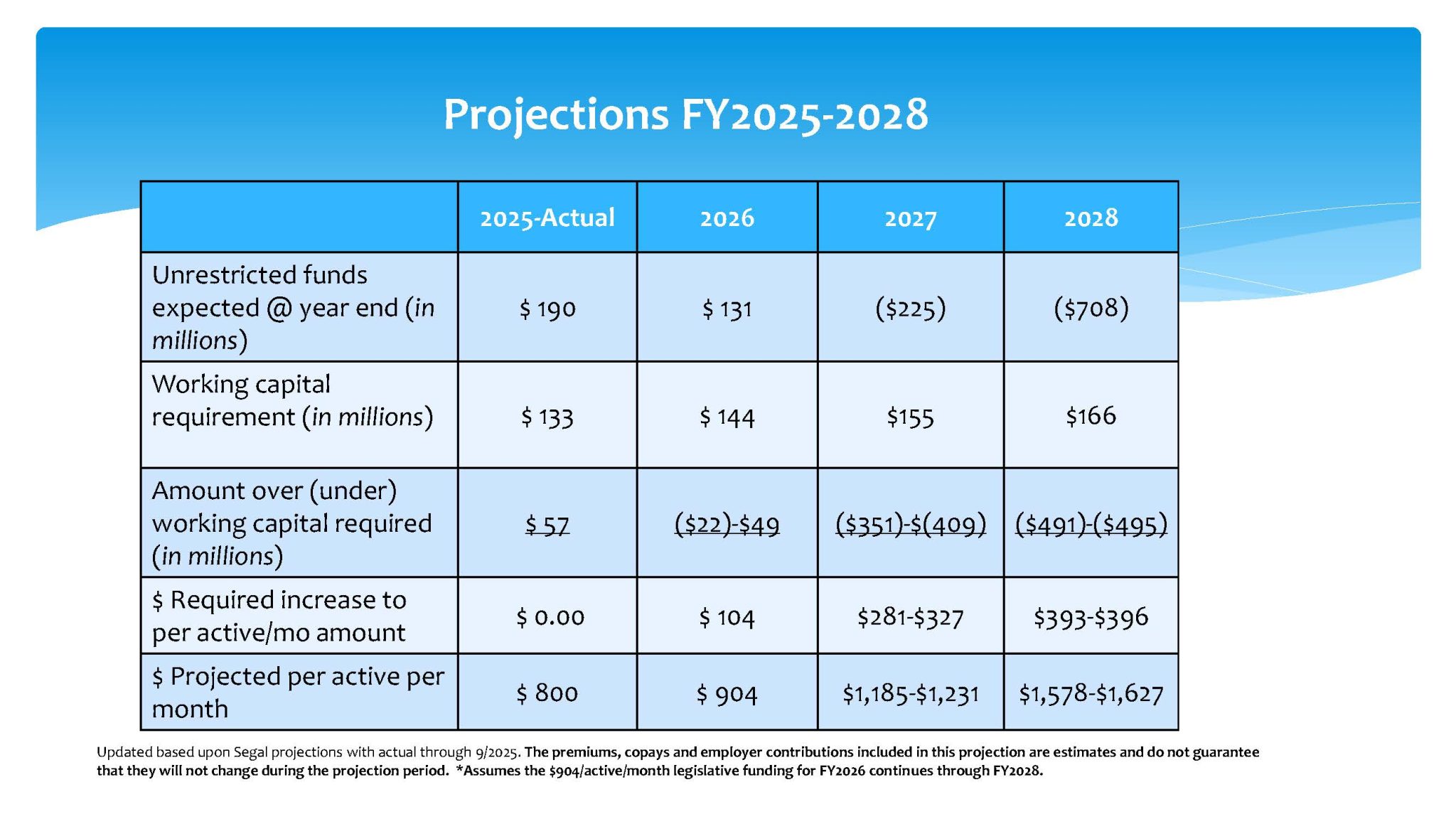
BIRMINGHAM, Ala. – Alabama’s teacher health insurance program is heading into the 2026 legislative session with a shortfall of between $350 million and $410 million by 2027, depending on how fast health care costs rise.
Tuesday’s Public Education Employee Health Insurance Program board meeting centered on what the shortfall could mean once lawmakers return in January to hash out the fiscal year 2027 budget and the limited Education Trust Fund dollars available to cover it.
“Just to put it into context, we’re asking for an additional $380 million in funding,” Retirement Systems of Alabama legislative counsel Neah Scott told the board. “There’s $570 million available in new funds to be appropriated from the ETF.”
Of that new money, K-12 officials have asked for $350 million, higher education is requesting around $280 million and a 1% pay raise costs about $50 million.
“So you start to do that math, and there are a lot of difficult decisions that are coming,” Scott said.
The solution the PEEHIP board approved in September was to request the full amount needed through an increase in the state’s monthly employer contribution for active employees, moving it from the current $904 to more than $1,200 per month for each of more than 104,000 active employees.
Lawmakers have indicated they are willing to work with PEEHIP but do not expect to cover the full shortfall through direct appropriations. Another transfer from the retiree trust fund or other sources could be necessary, Scott said.
RSA CEO David Bronner said lawmakers are facing one of the tightest years in recent memory because costs are climbing at the same time revenue growth has stalled.
“What the Legislature is facing now – for the first time in years – is much more demand than they have money,” Bronner said.
He said health care costs are increasing at 6% to 7% a year, adding $100 million to $150 million annually and creating what he described as a “scary” environment for insurance programs.
Bronner told board members that the most serious threat isn’t the current year, but what’s coming.
“Our problem is in the future,” he said. “What that means to our members, which is very important, is that you must be concerned about the next appropriation. Don’t miss the big picture here.
“The big picture is come January, next month, all the way until April, we’re going to set up this big problem that is facing Alabama. We have to solve it some way or another for ‘27.”
The legislative session begins Jan. 13.

Follow Us