
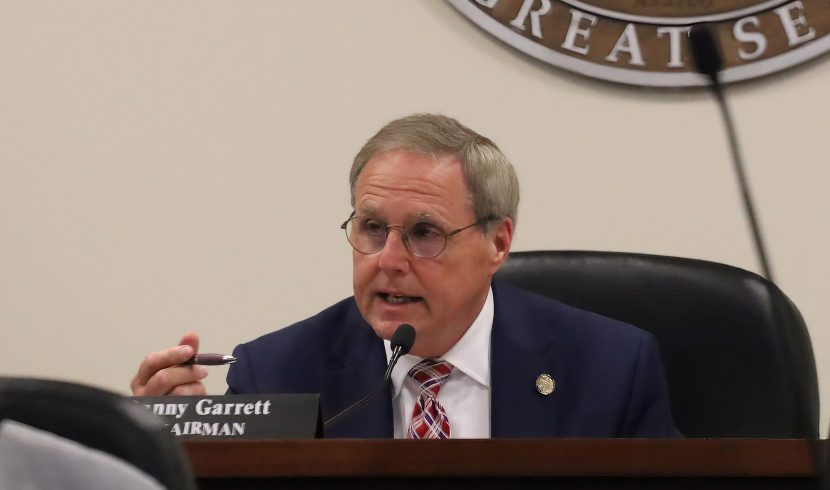
MONTGOMERY, Ala. – The House Ways and Means Education Committee on Wednesday approved its version of the state’s education budget package for the 2027 fiscal year, making several changes to Gov. Kay Ivey’s proposal ahead of an expected House floor vote Thursday morning.
Committee Chairman Danny Garrett, R-Trussville, told lawmakers the budget was shaped by several large expenses competing for the same pool of money.
Because of a law limiting growth in the Education Trust Fund budget to 5.75% over the current year, lawmakers had about $570 million in additional revenue to work with.
Much of that additional revenue was already needed to cover major expenses.
“(The Public Education Employees’ Health Insurance Program) wanted $380 million of that, and on top of that, $100 million for teacher raises,” Garrett said. “That’s $480 million that would only leave about $80 or $90 million to spread around everybody else.”
Garrett said lawmakers also had to make room for $37.5 million for construction and a $10 million debt payment for the new State House that Ivey did not include in her proposal. The new building is being paid for out of both the education and General Fund budgets.
The budget package includes seven bills covering the $10.5 billion Education Trust Fund budget, a $420 million supplemental spending bill, a $1 billion distribution from the Advancement and Technology Fund, a $500 million transfer from the Education Opportunities Reserve Fund, and legislation providing a 2% pay raise for educators.
The committee largely kept Ivey’s main Education Trust Fund budget intact but made several adjustments.
Lawmakers increased funding for some K-12 programs and created new initiatives such as microschool grants and innovation grants.
The committee also adjusted funding for the Public Education Employees’ Health Insurance Program, known as PEEHIP, which provides health coverage for teachers and other school employees.
The PEEHIP board projected a $380 million shortfall for the coming year. Ivey proposed sending $210 million to help stabilize the program. The committee reduced that amount to $180 million, leaving the board to cover the remaining gap through reserves or other adjustments.
Most of the changes committee members approved Wednesday occurred in the $420 million supplemental spending bill, which distributes surplus tax revenue from the 2025 tax year across K-12 schools, higher education institutions and a wide range of one-time projects.
Lawmakers shifted funding among several programs and projects in the supplemental bill, spreading the money across a longer list of school system earmarks, higher education projects and other one-time initiatives.
The committee also modified the proposed $500 million transfer from the Education Opportunities Reserve Fund, shifting some funding that Ivey proposed sending directly to colleges into the College and Higher Education Excellence and Results, or CHEER, performance bonus program.
State Superintendent Eric Mackey said the overall budget proposal maintains the priorities the department emphasized earlier in the session.
“The main thing when I came and spoke to this committee a few weeks ago is we want to invest in our educators,” Mackey said.
Allison King, director of government relations for the Alabama Education Association, said the organization supports many of the investments lawmakers included but is continuing to push for additional support for retired educators.
“We are thankful for the investments they’ve made in supporting our employees with a pay raise and funding for the needs,” King said. “But we are still interested in seeking support for a retiree one-time bonus in the supplemental budget.”
If approved by the House, the budget package will move to the Senate for further consideration.
Senate Finance and Taxation Education Budget Chairman Arthur Orr, R-Decatur, reviewed the House committee version during a Senate committee meeting Wednesday morning and told members they plan to take up the budget after lawmakers return from spring break in late March.


Follow Us