
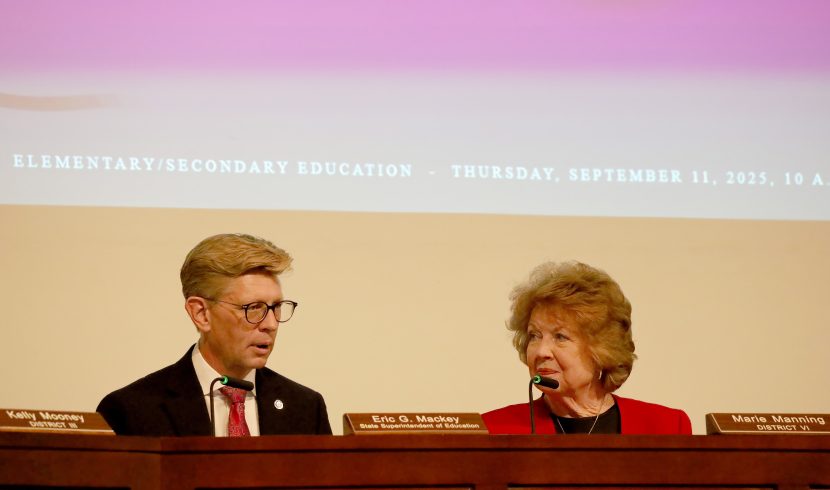
MONTGOMERY, Ala. – Testing rules and budgets for this year and next shared the spotlight as Alabama’s state school board met recently, devoting its longest debate to whether juniors should keep taking the ACT as the state’s main gauge of high school performance.
Board members spent most of their work session on a proposal to add the ACT WorkKeys exam alongside the ACT for accountability purposes – a shift aimed at putting career readiness on par with college readiness.
They also refined a $6.6 billion spending request for fiscal year 2027 and, in a short meeting prior to the work session, approved changes to teacher certification, updated rules for lunchroom staff and adopted the department’s fiscal ’26 operating budget.
High school testing
The question of whether Alabama should keep using the ACT as its primary measure of high-school performance led much of Thursday’s state school board meeting.
For years the college entrance exam has served as the state’s accountability test, but superintendents say it’s a poor measure for students headed straight into the workforce and doesn’t fully reflect Alabama’s English, math and science standards or new diploma pathways.
To address those concerns, a work group of superintendents, school board members and state officials has been studying testing options since October. Led by Jasper City Schools Superintendent Ann Jackson and Calhoun County Schools Superintendent Tony Willis, the panel broadened its review this summer after the U.S. Department of Education encouraged states to rethink how they measure student achievement under the Every Student Succeeds Act.
One of the group’s goals is to give career readiness the same weight as college readiness, Jackson said.
Under Alabama’s current testing system, the ACT is the only test used for federal high school accountability and drives much of a school’s grade on the state report card. High schools often earn lower grades than elementary and middle schools because those grades rely heavily on ACT proficiency and growth.
“Currently post secondary success, we feel, could be college – ACT – or WorkKeys,” Willis said. “And we feel like our job is to have them prepared for success, even if that’s going straight into the workforce.”
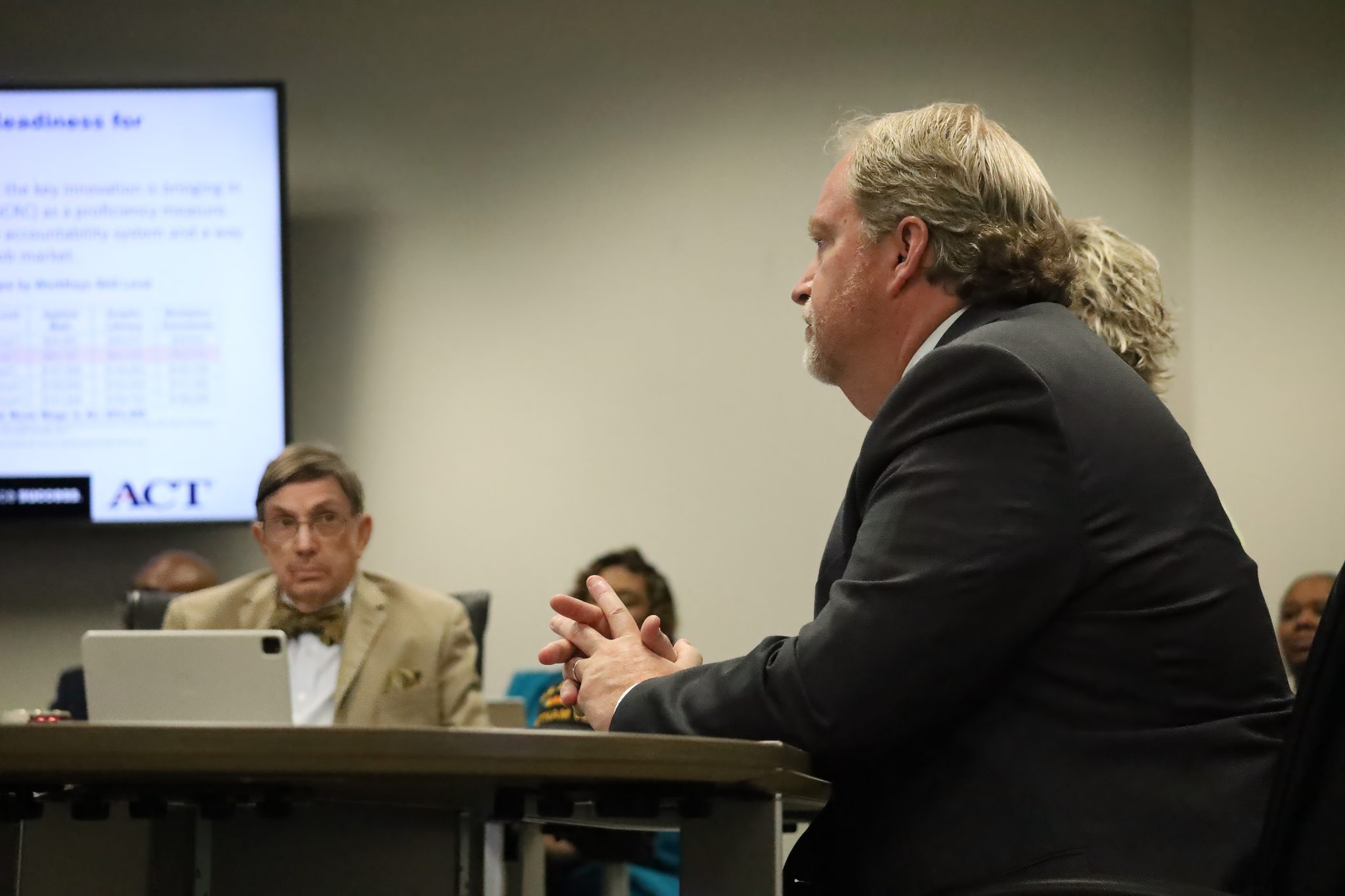
Calhoun County Schools Superintendent Tony Willis speaks during the Sept. 11, 2025, board of education work session in Montgomery, Ala. (Trisha Crain | Alabama Daily News)
Students on Alabama’s new Workforce Diploma pathway still must take the ACT for federal purposes, though their scores don’t count toward the state’s report card.
Many educators believe the ACT WorkKeys exam, which measures how well students apply learning to real world problems, is a better fit for them.
Employers often use WorkKeys to hire and place job applicants, State Superintendent Eric Mackey said.
After weighing end-of-course exams, a new state test for high schoolers and other combinations, the group recommended that all juniors take both the ACT with writing and ACT WorkKeys.
“It gives us more of a balanced assessment piece to promote both college – those students that are college bound, – but to also give voice and credence to our career readiness students that are ready to go to the job market,” Jackson said.
High-school seniors have the option to take WorkKeys to earn a college- or career-ready indicator – now a graduation requirement. This spring, about 35,000 seniors took the WorkKeys test, while 52,000 juniors took the ACT.
Mackey said federal officials seem serious about looking for new ways to measure achievement, and the department is preparing a waiver request to the U.S. Department of Education to allow the recommended change. He hopes to submit it soon, though approval could take six months or more.
FY27 budget request
Board members also continued work on their FY27 budget proposal. Revisions from an August retreat were included in a new draft, but members pressed for one major change: they want $52 million to help struggling readers in grades 4-12 – enough to serve every student who needs support. Lawmakers have funded a portion of that request in past years.
The Foundation Program request remains the same as the FY26 request because enrollment numbers will not be available until early November.
Mackey noted that the request reflects the full cost of transportation – $615.4 million – to keep lawmakers informed about how costs for buses have skyrocketed in recent years. “This is an issue that’s growing because the cost of buses is growing much faster than the regular rate of inflation,” he said.
The cost for a school bus is around $160,000, he said. “It was in the $80,000 to $89,000 range when I started this position eight years ago. It’s just crazy how fast it’s growing.”
The overall request totals $6.6 billion, up $347 million from the FY26 budget. Priorities include early math instruction, help for older struggling readers, expanded career-tech programs and school safety.
The board must adopt a final FY27 proposal at its next meeting to meet the Nov. 1 deadline for agencies to submit budgets to Gov. Kay Ivey’s office.
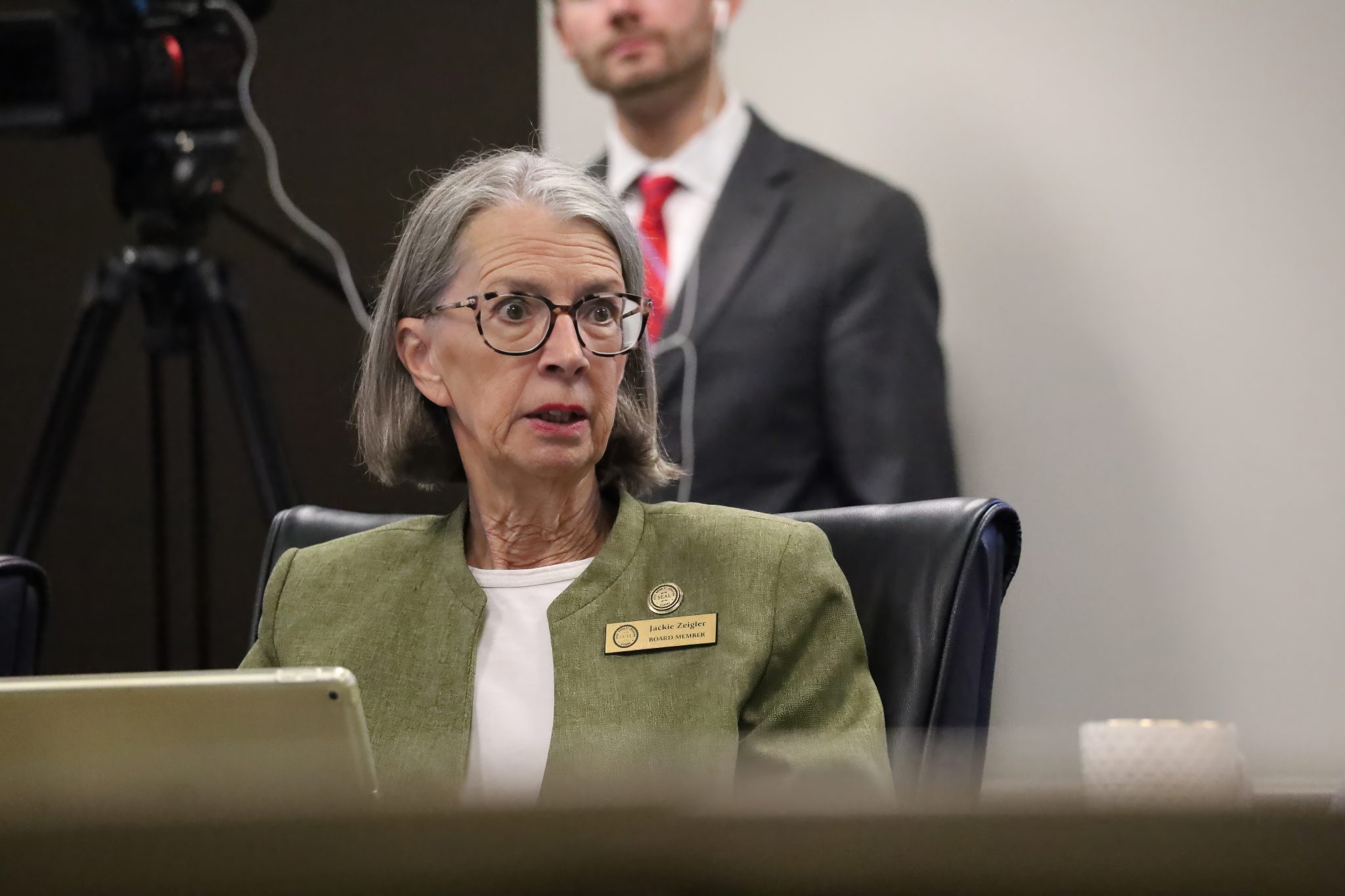
Alabama Board of Education member Jackie Zeigler speaks during the board’s Sept. 11, 2025, work session in Montgomery, Ala. (Trisha Crain | Alabama Daily News)
Board meeting business
The board’s formal meeting, held prior to the work session, lasted just 20 minutes and covered four routine items:
- Changing the reading test required for elementary-grade teacher certification
- Proclaiming Oct. 13-17 as “National School Lunch Week”
- Updating rules for school-lunch staff qualifications
- Adopting the Department of Education’s FY26 $54.7 million operating budget
The reading test update was a formality prompted by Pearson’s renaming of the Foundations of Reading assessment from 190 to 890. The passing score of 233 remains the same. All teachers must pass certain tests before they are given their final certification. The types of tests and their passing scores are set by the state board of education. Most elementary teachers have to pass multiple tests to become certified.
The next board meeting is scheduled for Oct. 9 at 10 a.m., with the work session following the meeting.


Follow Us