
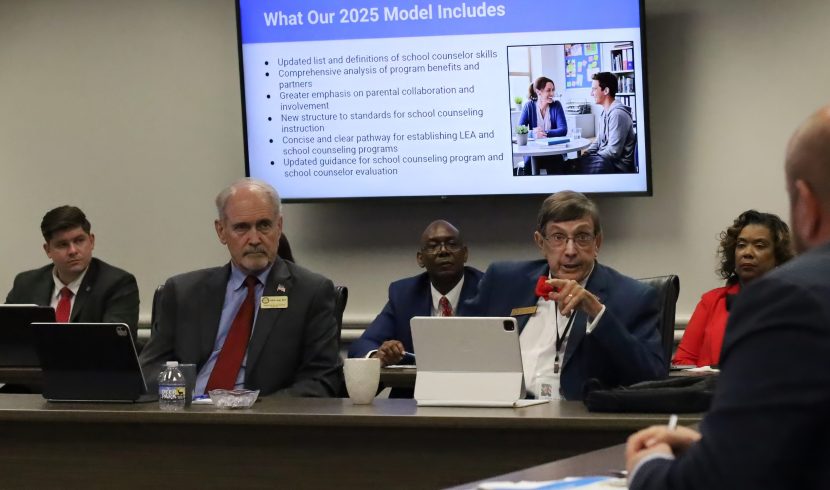
MONTGOMERY, Ala. – The Alabama State Department of Education has released a draft of a new model for school counseling – the first update in more than two decades – that officials say better reflects how schools operate today and gives parents a formal role in how students are guided through academics, careers and well-being.
The draft Comprehensive School Counseling and Guidance Model, discussed during Thursday’s State Board of Education work session, is online and available for public comment through Nov. 10. A revised version will follow for another review before the board votes in December.
State Superintendent Eric Mackey told board members the current counseling plan – approved in 2003 – is basically unusable.
“Essentially, we don’t have anything right now,” he said. “It’s been 22 years since this has been updated. We’ve got to get this one across the finish line.”
Two previous attempts to update the plan never reached a vote.
The new 50-page draft replaces the current 90-page plan and lays out clear standards for what students should know and be able to do in three domains – academic development, career development and foundational wellness – from kindergarten through 12th grade.
In the wake of national debates over gender identity and social-emotional learning, school counselors have faced public criticism and been accused by some groups of overstepping their roles.
In 2022, Alabama lawmakers filed a bill to prohibit the department from using standards set by the American School Counselor Association, which they claimed indoctrinated students in beliefs beyond traditional academics.
The new plan defines the counselor’s role within each of the domains and, among other responsibilities, requires counselors to “consult and collaborate with teachers, parents/guardians and staff to enhance their effectiveness in helping students.”
Mackey emphasized that school counselors do not provide therapy.
“We don’t allow any student to go into therapy unless the parents opt in,” he said.
Lawmakers recently raised the age of consent for mental health services to 16, meaning schools must have written permission from parents to allow students to participate in counseling.
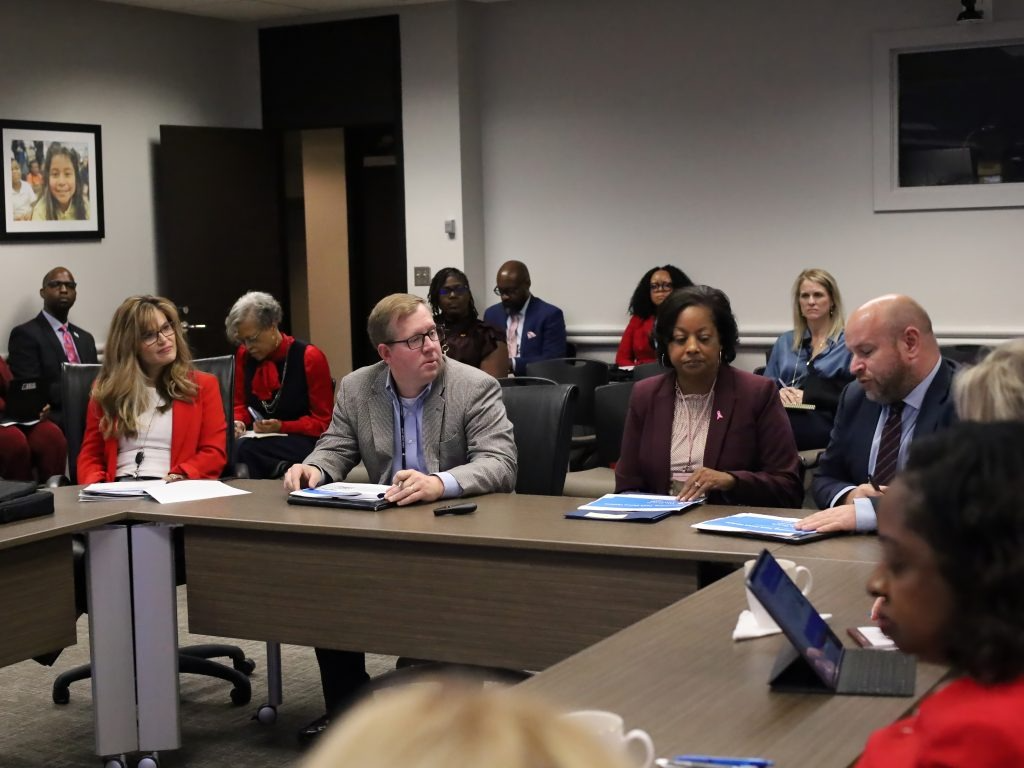
The Alabama Board of Education work session on Oct. 9, 2025, in Montgomery, Ala. (Trisha Crain | Alabama Daily News)
Students, parents and other stakeholders were at the forefront of developing the plan, the department’s course of study administrator Blake Busbin said.
“With this document, we have recognized that imperative sense of seeing parents as more than just a stakeholder, but as an equal, if not greater, partner in student education,” he said.
The model spells out grade-banded standards – K-2, 3-5, 6-8 and 9-12 – that all districts must meet. Schools may add local content but cannot remove any state standards.
For example, academic development includes academic confidence, study skills, goal-setting and lifelong learning. Career development covers career awareness, goal-setting and exploration. Foundational wellness includes problem-solving, character development and personal responsibility.
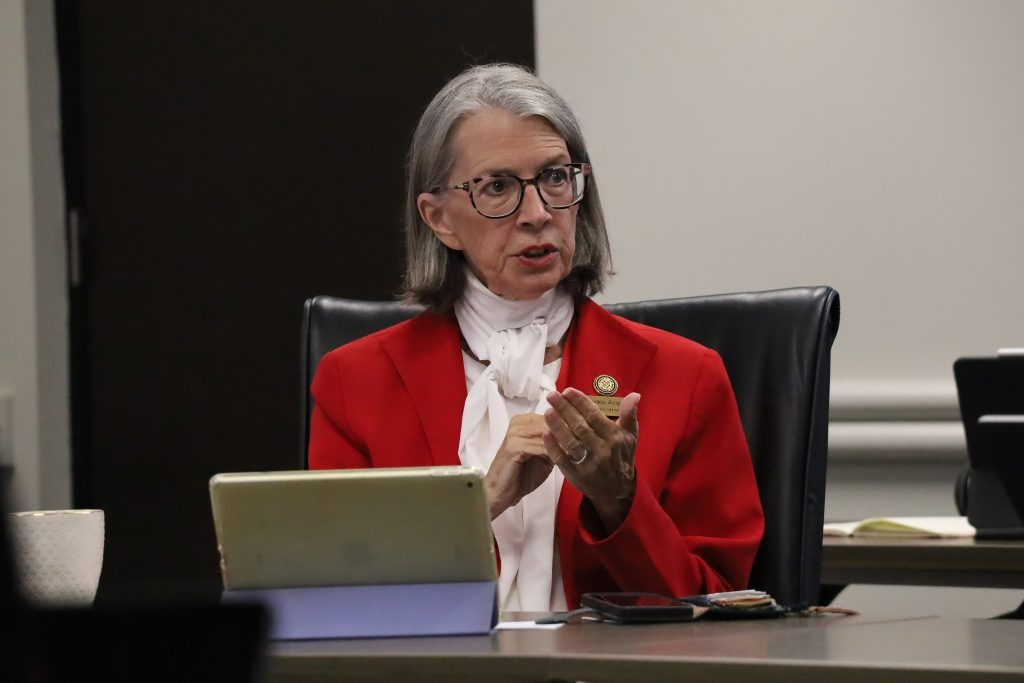
Alabama Board of Education member Jackie Zeigler speaks during the board’s work session on Oct. 9, 2025, in Montgomery, Ala. (Trisha Crain | Alabama Daily News)
Board member Jackie Zeigler praised the multiple comment periods, saying they should help “eliminate a lot of the mistrust.”
“This is going to be a biggie,” she said.
Board member Allen Long said that how the department communicates with the public will matter as much as the content of the plan.
“I think we’ll have a win if we can make sure that every opportunity we advertise this is not just a small group of people at the big office in Montgomery deciding what we’re going to do with your kids,” Long said. “We need them to know this is your chance to review it, make comments, make suggestions — because we’re still open for business.”


Follow Us