
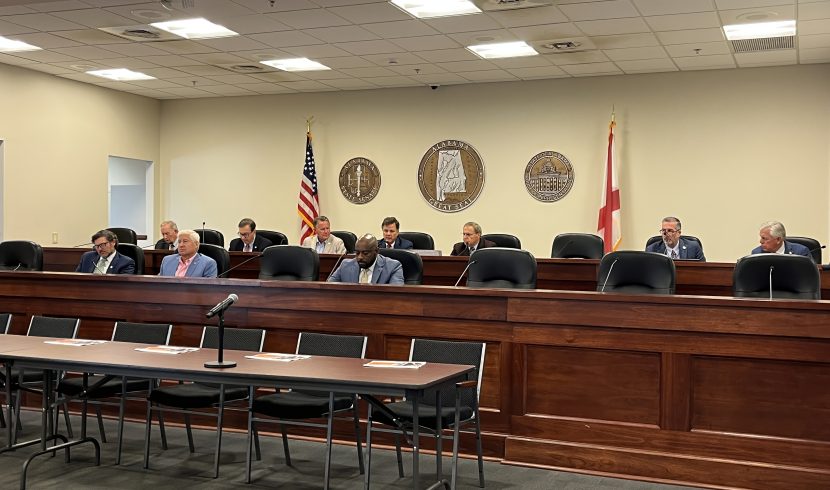
MONTGOMERY, Ala. – Alabama lawmakers held the first of three expected meetings Thursday to discuss tying a portion of state funding for public four-year colleges and universities to performance metrics such as graduation rates and workforce placement.
Sen. Arthur Orr, R-Decatur, who chairs the Senate education budget committee, said outcomes-based funding could better align Alabama’s 14 public universities with workforce and economic needs.
House education budget chair Danny Garrett, R-Trussville, said Alabama’s colleges and universities should be part of the plan to help raise the state’s labor force participation rate – among the lowest in the nation – and encourage graduates to stay in Alabama.
“We will certainly want to have the four-year institutions play the role they need to play, but also we want people to stay in the state,” Garrett said. “We want graduates to have careers they can do in Alabama, and it needs to be in line with where our workforce needs are, which is what the market will demand.”
Orr added that he wants accountability as part of the initiative: “Rather than… just handing them the money and saying ‘go forth and educate’ without some expectation from our end.”
Will Carroll, an analyst with HCM Strategies, outlined for lawmakers metrics used by other states, including graduation rates, transfer statistics, high-demand degrees, wages after graduation and cost-based efficiency figures.
Carroll’s presentation is posted on the Legislative Services Agency’s website at this link.
After the meeting, Orr told ADN he wants input from university leaders.
“It’s going to have to be a partnership, and we’re going to have to work with them,” he said. “But they have to be working in good faith.”
He emphasized that lawmakers aren’t trying to “run their institutions,” but with a $1.8 billion state investment for FY26, he wants cooperation and accountability.
Garrett said that some institutions may embrace the approach while others may not.
“We want to focus – and reward that focus – based upon their ability to increase outcomes that are consistent with our state goals,” Garrett said, noting those goals are still being developed.
“What we’re trying to do is get money to those institutions that want to produce the results that we need for the state.”
House Minority Leader Anthony Daniels, D-Huntsville, said he wants lawmakers to keep student circumstances in mind when determining metrics for institutions.
“We’ve got to be able to compare apples to apples – in-state students, their situations, from an academic standpoint,” he said. “I just want us to be broad in our approach.”
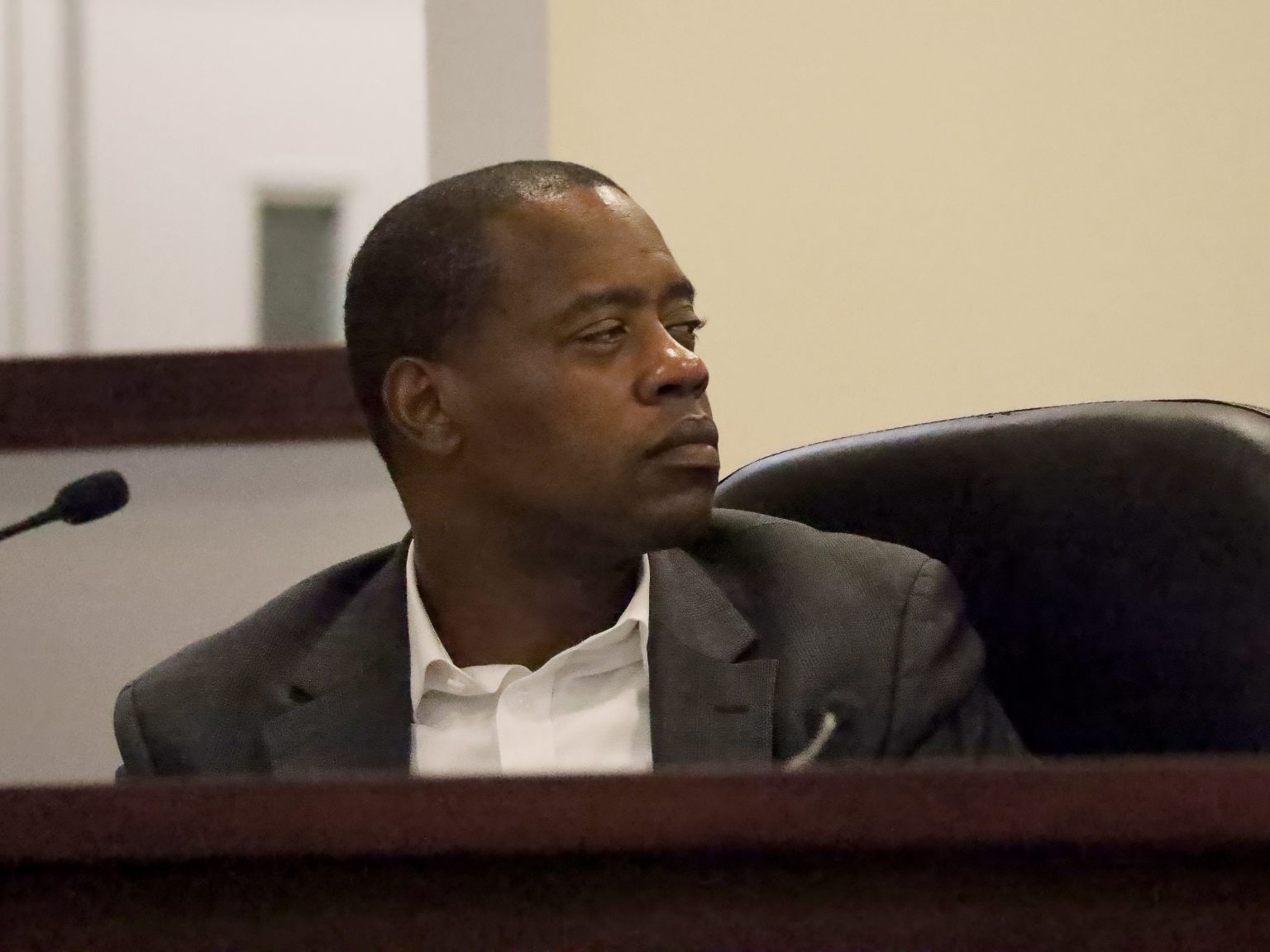
Rep. Anthony Daniels, D-Huntsville, during the Senate and House education budget and policy committees meeting in Montgomery, Ala., on Aug. 28, 2025, to discuss modernizing higher education funding. (Trisha Crain | Alabama Daily News)
Gordon Stone, who leads the Alabama Higher Education Partnership, said he looks forward to working with lawmakers to explore how outcomes-based funding can be implemented.
“Alabama’s public universities represent a $27 billion annual contribution to the state’s economy,” he said. “They touch every city and county with their work. Lives are changed every day on the university campuses as students grow, learn and serve.”
Orr said enabling legislation could be ready by the 2026 session, but the actual metrics would be set through the budget so they could be adjusted when needed in the future without changing the law.
In 2024, 21 states allocated outcomes-based funding to four-year universities and 28 states did so for two-year colleges, according to the State Higher Education Executive Officers Association. Alabama’s community college system has awarded some of its funding based on performance since 2019.
Funding for the higher education outcomes-based model would come from the Educational Opportunities Reserve Fund. That is the same fund used for the K-12 RAISE Act, approved this year. Lawmakers did not discuss Thursday how much money could be tied to the metrics.
The RAISE Act provides targeted funding to K-12 schools serving students with greater academic and economic challenges, including poverty and special education needs, using weights that add per-student funding.
Lawmakers dedicated an initial $166 million to the effort. It is outside of and in addition to the state’s traditional school funding model.
The full meeting can be seen below or at this link.


Follow Us