
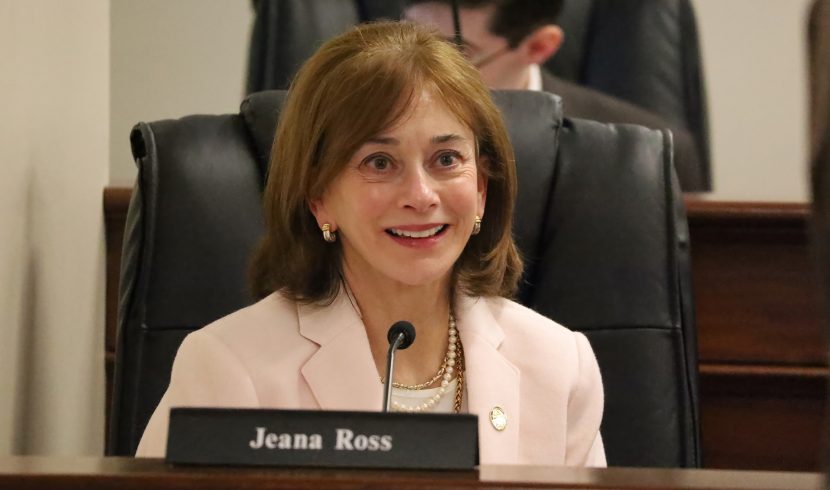
MONTGOMERY, Ala. – A House committee on Thursday approved a bill that would set statewide standards for how screens are used in Alabama classrooms, expanding the proposal to apply through 12th grade.
House Bill 584, sponsored by Rep. Jeana Ross, R-Guntersville, would establish guidelines for screen-based instruction in Alabama schools and create a task force to develop standards governing how screens are used in classrooms.
The bill initially applied to students in kindergarten through fifth grade but was amended in committee Thursday to extend the requirements through high school.
The proposal follows another measure sponsored by Ross this session that limits screen use for children in early childhood programs.
That law, signed in late February, prohibits screen use for children under age 2 and requires state agencies to develop age-appropriate screen time standards for children ages 2 to 5 in publicly funded early learning settings.
Ross told the House Education Policy Committee that strong public response to that earlier legislation prompted consideration of limits on screen use in older grades.
“(House Bill 584) is an extension of the original screen time bill that was from birth to kindergarten,” Ross said. “And because of tremendous, overwhelming response, we were asked to take this through fifth grade.”
Committee members adopted two amendments Thursday before voting to advance the bill.
One amendment revised several provisions in the legislation, including a requirement that schools provide regular vision breaks during screen-based instruction.
The bill requires students to follow the 20-20-20 rule, meaning that every 20 minutes students must spend at least 20 seconds looking at an object at least 20 feet away from the screen.
A second amendment expanded HB584 so the proposed requirements would apply to students through 12th grade instead of only elementary grades.
The State Board of Education would be required to adopt standards that would be developed by a newly created Instructional Technology Task Force.
The standards would address screen time limits by grade level, required vision breaks and expectations that digital assignments have clear educational value.
The task force would also develop best practices for virtual instruction, including remote learning days.
The bill now heads to the House floor for consideration.


Follow Us