
BIRMINGHAM, Ala. – The House Education Budget Committee on Wednesday advanced a bill that would shift more authority over faculty governance, tenure and curriculum to university governing boards.
House Bill 580, sponsored by Rep. Troy Stubbs, R-Wetumpka, would require faculty senates at Alabama’s public four-year universities to serve only in an advisory role, require periodic post-tenure reviews and give governing boards final approval over degree requirements and curriculum.
The bill also says accrediting agencies could not require institutions to violate state law or penalize them for complying with it. It would take effect Oct. 1.
In effect, the bill would reduce faculty influence over university decision-making while expanding the formal authority of boards of trustees.
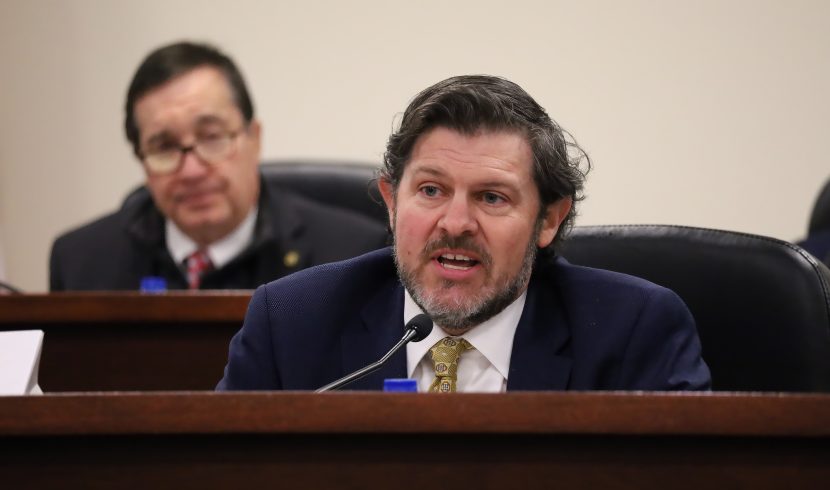
Stubbs told committee members the bill is intended to give universities more flexibility as workforce demands and community needs change.
“Universities are looking for flexibility, because the job workforce requirements are changing, needs for communities are changing, so they want to have the financial flexibility to adapt to that,” Stubbs said.
He said many institutions have increasingly turned to contractual or contingent positions rather than tenure-track jobs, and that about 15 states have passed similar legislation in recent years, though not all of those laws are as broad as HB580.
The bill addresses three major areas of higher education governance: faculty senates, tenure and accreditation.
Faculty leaders opposing the bill say it addresses problems they do not believe exist.
“We’re just a little confused why they feel the need to monitor or change anything about the way institutions work in Alabama,” said Sara McDaniel, president of the University of Alabama chapter of the American Association of University Professors.
“We don’t know of any problems that preceded this, and we all have frameworks for these things. We have chancellors and presidents and boards of trustees, and there are already established forms of communication and governance.”
Under HB580, only a governing board could establish a faculty senate. Existing faculty senates would be abolished unless they are ratified by the governing board and brought into compliance with the new law.
The bill would also require faculty senates to be partly appointed by a university president and partly elected by faculty, and it would bar those bodies from having final decision-making authority.
Appointed senate members could serve six one-year terms while elected members could serve a single two-year term.
McDaniel said faculty senates function as a representative channel between faculty and university leadership.
“It is a communication channel, and it is our only way to have our voices heard,” she said. Faculty senators, she said, are elected by colleagues and carry concerns from their colleges to administrators in the same way lawmakers represent constituents.
In addition, a faculty senate could not issue statements or reports on matters not directly related to its advisory duties using university resources. Senate members could be removed by the institution president in some circumstances, including for failing to operate within the senate’s assigned role.
Regarding tenure, HB580 would require each governing board to adopt a tenure policy that includes post-tenure review. Tenured faculty could have their tenure revoked or be subject to other discipline if a review finds incompetency, neglect of duty or other good cause.
The bill also allows governing boards to adopt policies authorizing dismissal of tenured faculty for serious misconduct, as long as due process protections are provided.
McDaniel said the public often misunderstands tenure as a guarantee of lifetime employment, when in practice it is designed to protect academic inquiry.
“The purpose of our tenure is so that we should be able to be curious and push boundaries and conduct research that’s never been done before, and think critically,” she said. “It doesn’t make sure that you never lose your job.”
She said the university already has annual review processes in place and that tenure does not protect faculty from being fired for criminal wrongdoing.
The bill would also give governing boards final approval over the courses and curriculum required for a degree. While boards could seek recommendations from campus administrators or delegate preliminary approval, final approval would have to come from the governing board.
Regarding accreditation, the bill would prohibit accrediting agencies from forcing a public institution to violate state law or from taking adverse action against an institution for complying with it.
Similar language appears in House Bill 382, sponsored by Rep. Susan DuBose, R-Hoover, which was approved by the House Education Policy Committee last month but has not moved further.
The proposal comes as lawmakers also move toward a new higher education performance funding model, the CHEER Act, that would award bonus money to eligible institutions that meet certain goals. Some of those goals are expected to reflect lawmakers’ priorities, including retaining graduates in Alabama and producing workers for high-demand, high-wage fields.
The debate also comes in the wake of the 2024 passage of Senate Bill 129, which restricts public colleges, universities and K-12 schools from promoting certain “divisive concepts.”
A group of University of Alabama professors and students sued over that law, arguing it violated free speech protections. A federal judge ruled against the plaintiffs in August, and that decision is now on appeal to the 11th Circuit.
Stubbs’ bill now heads to the House floor.


Follow Us