
BIRMINGHAM, Ala. – Officials with the Public Education Employee Health Insurance Program on Tuesday said the state’s insurance program remains headed toward a $380 million shortfall next fiscal year as budget negotiations continue over how much money lawmakers will apply to the deficit.
The projected gap applies to fiscal year 2027, which begins Oct. 1, 2026. The PEEHIP board has asked lawmakers to cover the full amount of the shortfall.
Medical and pharmaceutical costs covered by the plan have more than tripled since 2003 and are projected to approach $2 billion by 2028, according to board projections.
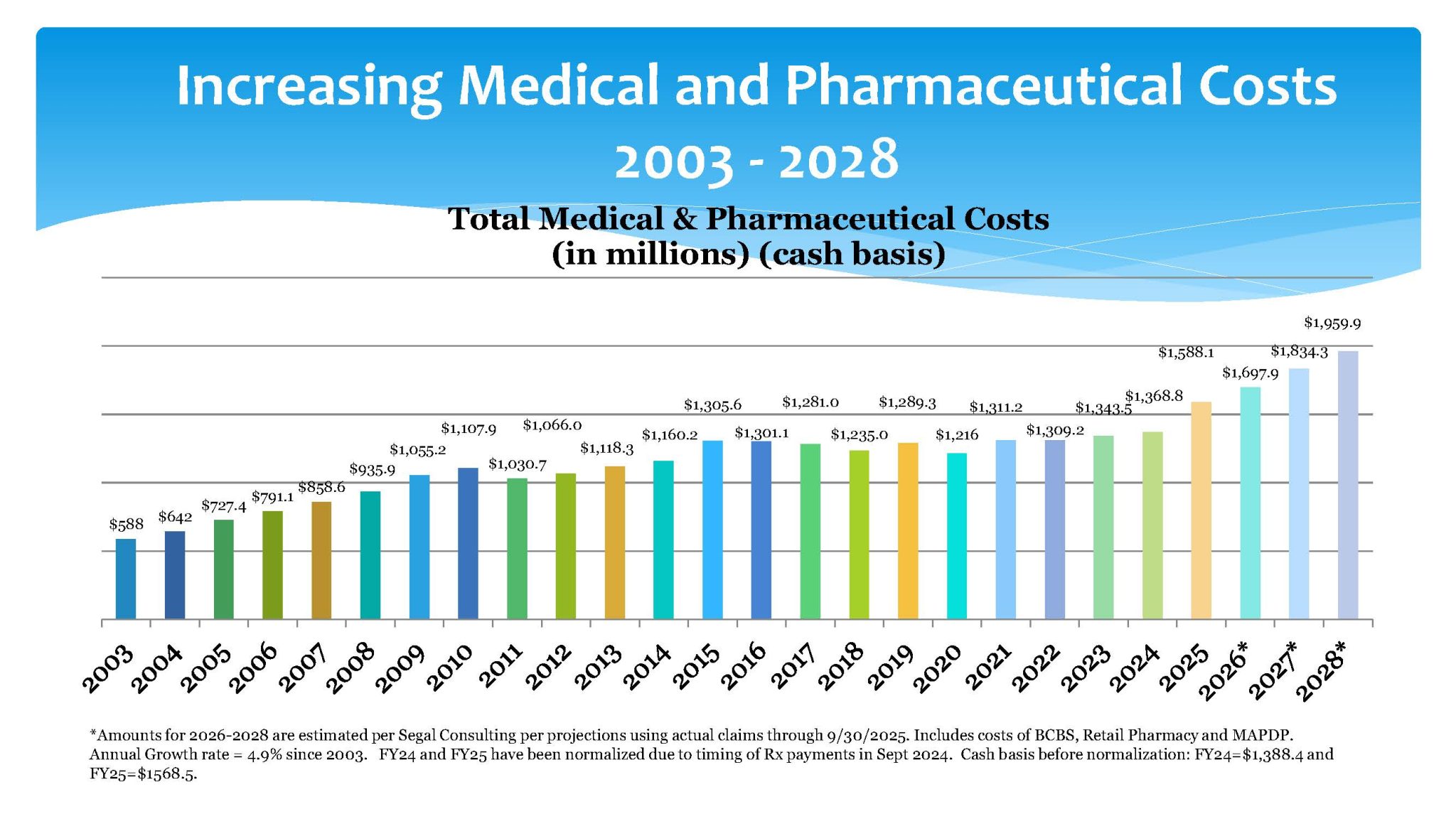
Projection of medical and pharmaceutical costs for PEEHIP from 2003 through 2028. (Retirement Systems of Alabama)
Currently, state-funded employers such as local boards of education and community colleges contribute $904 per active member each month. Program officials requested that amount be increased to $1,209 per member per month.
Gov. Kay Ivey’s proposed budget would provide $1,073 per member per month, according to Retirement Systems of Alabama Chief Financial Officer Diane Scott.
The difference between what PEEHIP requested and what is proposed amounts to roughly $136 per employee per month. Estimates for costs included 104,000 active members.
Neah Scott, RSA’s legislative counsel, told board members she has heard “rumblings” that lawmakers could appropriate about $190 million – roughly half of the projected shortfall – though the education budget has not yet been taken up.
Active employees pay monthly premiums ranging from $30 for an individual plan to $307 for family coverage, with additional adjustments for tobacco use and wellness participation.
David Bronner, RSA’s chairman, said the program can meet its obligations in the short term if lawmakers do not fully fund the request.
“There’s no panic,” Bronner said. “There’s plenty of money in the trust fund.”
The Retiree Trust Fund currently holds about $2.7 billion. For the current fiscal year 2026, the board will transfer $119 million from the fund to cover costs. An additional transfer estimated between $12 million and $74 million may also be needed before the fiscal year ends.
“My objective is to be able to say to you as members and the people you represent that your health care is covered for this year,” Bronner said. “Hopefully … if we get the help from the Legislature again, we can cover it next year.”
Longer-term projections remain more concerning. Bronner said fiscal year 2028 presents “the next headache,” with estimates showing a potential shortfall approaching $500 million if current trends continue.
Lawmakers are expected to take up the education budget in the next few weeks.


Follow Us