
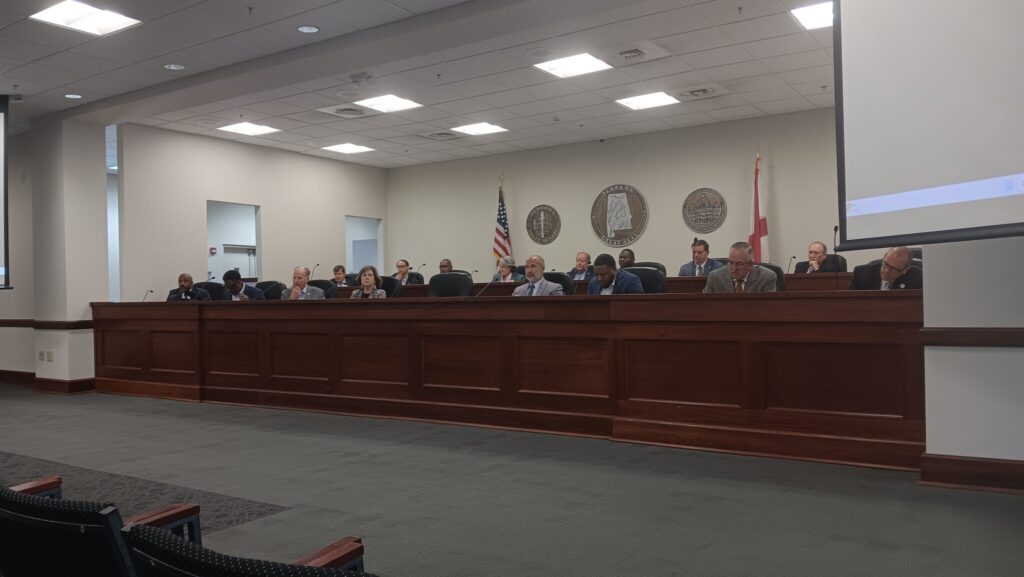
MONTGOMERY, Ala. — Alabama officials are stepping up efforts to help people leaving prison succeed once they return home, with a long-term goal of cutting the state’s recidivism rate in half by 2030.
The state’s Reentry Task Force is focused on removing barriers that often send former inmates back to prison. The group builds on work begun in 2021, when the Legislature created the Joint Reentry Commission to study challenges facing people after release.
Cam Ward, director of the Alabama Bureau of Pardons and Paroles and chair of the task force, said lowering the state’s recidivism rate below 15 percent would place Alabama among the best in the nation.
“You’ve got to constantly evolve to deal with the problem,” Ward said. “It’s Public Safety 101, but you have to do something. If you provide no services, or you don’t address their underlying issues, the odds of them going back to prison greatly increase.”
One immediate priority is identification. The Alabama Law Enforcement Agency is training Department of Corrections officials to issue driver’s licenses and state IDs inside prisons. The effort is currently operating as a pilot program and is expected to expand statewide.
“Getting their paperwork in line, whether it’s a Social Security card, the birth certificate is the biggest thing,” said Sam Adams of the agency. “That’s the hardest part, especially if they’re born outside of Alabama.”
Another concern involves job training programs. Task force members said some inmates complete classes only to discover they are barred from working in those fields because of their criminal records.
“This is after time put into the class, after fees paid and tuition paid, and then they find out there’s this barrier,” said Jonathan McNair of the Alabama Department of Workforce. “Part of the onus on this group is to make sure those things do not happen, and that people are informed up front about what services are available.”
Ward said coordination among state agencies is essential. He noted that agencies such as Mental Health, Veterans Affairs, Medicaid and the Department of Human Resources each collect data that could help tailor services to individuals leaving prison.
“The problem is, everybody wants a cookie-cutter approach,” Ward said. “Criminal justice is different. It’s not a spreadsheet. Every person is different. But we all have to share data, and that’s something we haven’t been doing over the years.”
One success highlighted by the task force is the Parolee Rehabilitation Education Program, or PREP Center, in Perry County. The pilot program combines treatment, education and job training, and so far has graduated hundreds of participants without any returning to prison. Officials say they hope to expand the model statewide.


Follow Us