
BIRMINGHAM, Ala. — Alabamians continue to place public education at the top of their priority list for the state, according to the latest Public Affairs Research Council of Alabama survey.
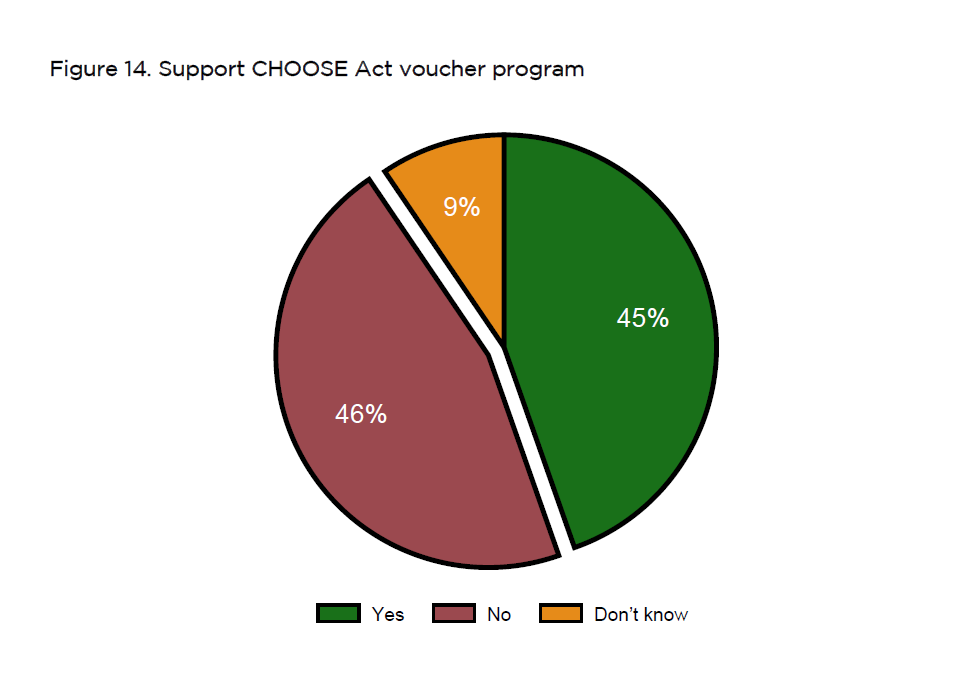
The results show Alabamians highly value their public schools and want state leaders to keep investing in them. But when it comes to the CHOOSE Act, opinions are clearly divided.
The survey, conducted annually, offers a snapshot of voters who want better supports for teachers and classrooms, while still showing caution about how new school choice programs might affect public schools.
Nearly three out of four respondents said the state spends too little on education. A majority also said they would be willing to pay higher taxes if the money went to schools, though no single tax – property, sales, internet sales or income tax – drew majority support.
Most said the state should use part of its education savings – built up during the last few years when receipts in the Education Trust Fund exceeded expectations – to meet current needs, like improving school facilities and updating the funding formula.
The survey was conducted over five months in late 2024 and early 2025 and prior to Alabama lawmakers approving the RAISE Act, which targets additional education funding toward groups of students with higher needs.
Teacher pay and benefits topped the list of priorities if new, additional funding was provided. That was followed by mental health support, school safety, facilities and special education.
Responses to each question reveal differences in preferences based on education level, geographical location and whether the respondent has children in public school. PARCA also noted partisan differences, though the detailed breakdowns by party were not included in the published results.
Just over half of respondents said they’d prefer their children or grandchildren to be educated in public schools. Just under a third preferred private schools, 12% preferred homeschool.
Democrats and independents in large majorities preferred public school, while a plurality of Republicans chose private school, according to PARCA.
This year’s survey asked about the CHOOSE Act for the first time. The program provides families with up to $7,000 for private school tuition, public school tuition charged to out-of-district students, or other approved expenses, and up to $2,000 for homeschooling through state-funded education savings accounts.
Alabamians are evenly split: 45% support, 45% oppose and 9% are unsure.
Regarding the impact on public schools, nearly half said ESAs will hurt public schools, while fewer than one-in-three expect a positive effect.
Fewer than half of ESA supporters said they would still support vouchers even if they weaken public schools. And fewer than a third of supporters said they’d still support vouchers even if they fail to open doors for families who couldn’t otherwise afford private tuition.
A majority of Republican ESA supporters – more than 60% – said they would no longer support the program if it doesn’t “substantially increase access” for families who couldn’t afford it, according to PARCA.
Two-thirds of respondents said ESAs should be given only to low or moderate income families, while just under a third said any family should be eligible for an ESA.
Strong majorities of respondents want accountability for private schools that enroll students using ESAs. Most respondents said private schools that take public money should have to follow the same rules as public schools – including meeting subject-specific standards, posting an annual school report card, publishing test results and hiring qualified teachers.
Almost three-quarters said private schools participating in the CHOOSE Act program should be required to admit local students regardless of disability or test scores.
Other priorities
The council also asked about other major issues facing the state. Health care came in as the second most important spending priority, followed by highways and public safety.
Most said they pay about the right amount, but many were open to changes if the money went toward top priorities. Respondents also voiced their feeling that officials in Montgomery don’t care what they think – with a total of 66% either strongly agreeing (35%) or agreeing (31%) with that statement.
About the same percentage believe they have no say in what state government does – a total of 62% either strongly agree (28%) or agree (34%).
The council’s summary of survey results, along with the questions respondents were asked, is available on its website at this link.

Follow Us