
Consistent routines are crucial for young children. According to PBS KIDS for Parents, routines help create a sense of security, guide responsible behavior, support social skills and manage transitions between activities. Daily routines are also a great opportunity for learning, development and fun!
But for a single-parent with a child who has Autism Spectrum Disorder, the importance of a routine becomes more than a powerful tool. It's necessary for creating comfort and predictability for your child.
Single-mother, substitute teacher and translator Diana Isom knows what that’s like.
“With a kid who's autistic, they thrive in routine,” Diana said. “They have to have the same stuff. And so what I've been doing is basically anytime he asks for his tablet, I put on PBS KIDS.”
I caught up with Diana at home on Zoom with her three year-old son Keenan nearby. Keenan was under the weather, and Diana periodically paused to help him navigate to a show on his tablet. His favorite right now? Diana tells me it’s Daniel Tiger’s Neighborhood.
Lately, he’s started watching Carl the Collector. It’s PBS KIDS’ first series with an autistic main character and follows the everyday adventures of Carl, his friends and his many collections.
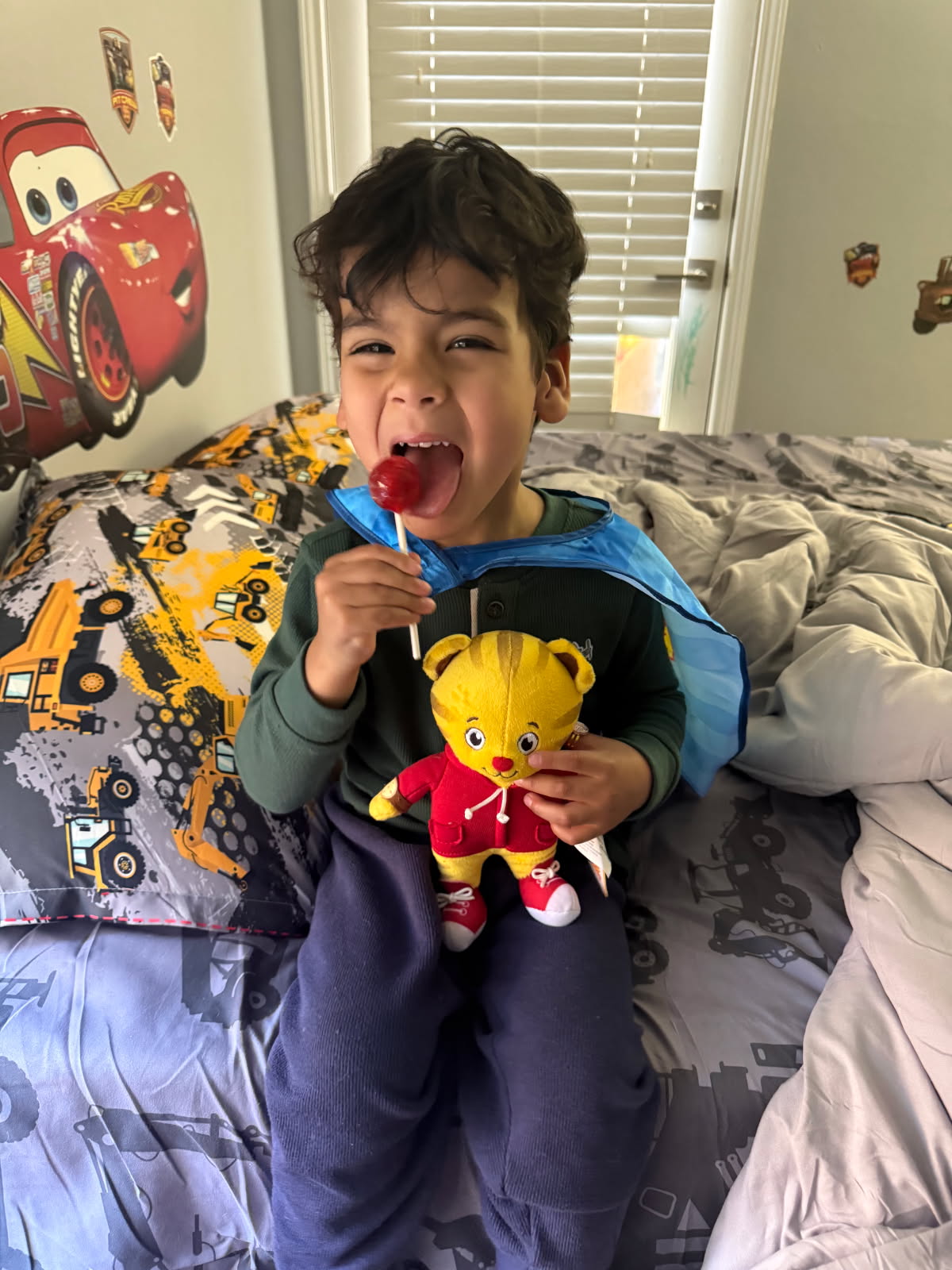
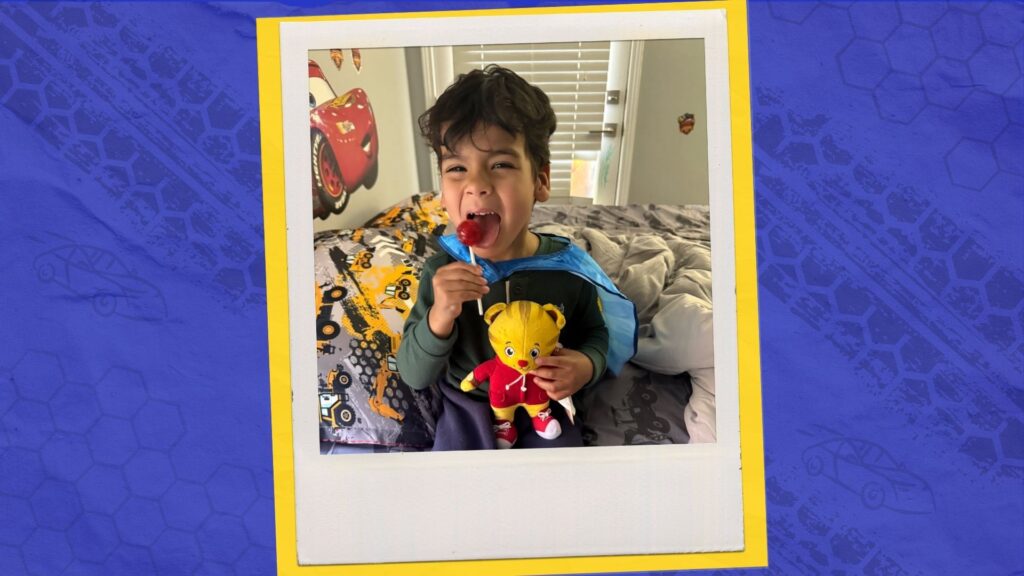
Keenan Isom holding a stuffed Daniel Tiger
As a PBS Kid herself, Diana wanted to ensure her son was one, too, but she started noticing something surprising.
“He is a lot more in depth about things. He knows so many words, like words I never taught him, words I never said,” she said. “He is at a kindergarten level, and he's three years old. That's amazing! I'm saying that has to be PBS.”
Diana talked about his current support system, which includes some occupational therapy, speech therapy, physical therapy, and daily ABA (Applied Behavior Analysis) therapy. She emphasized that many of the goals they’ve set are on par with his age, but his knowledge of colors, the alphabet and numbers is amazing.
Lifetime PBS viewer Anne Turner-Henson, PhD, RN, FAAN, wasn’t surprised.
“There is overwhelming scientific evidence of the positive developmental aspects of PBS KIDS programming,” she told me via email.
Anne is a retired professor at the University of Alabama at Birmingham’s School of Nursing and was a pediatric nurse and scientist for 48 years.
“Developmental aspects of caring for children was a focus in my professional care,” she said. “With all the concerns about screen time and social media, parents/families need something they can trust to be safe for children.”
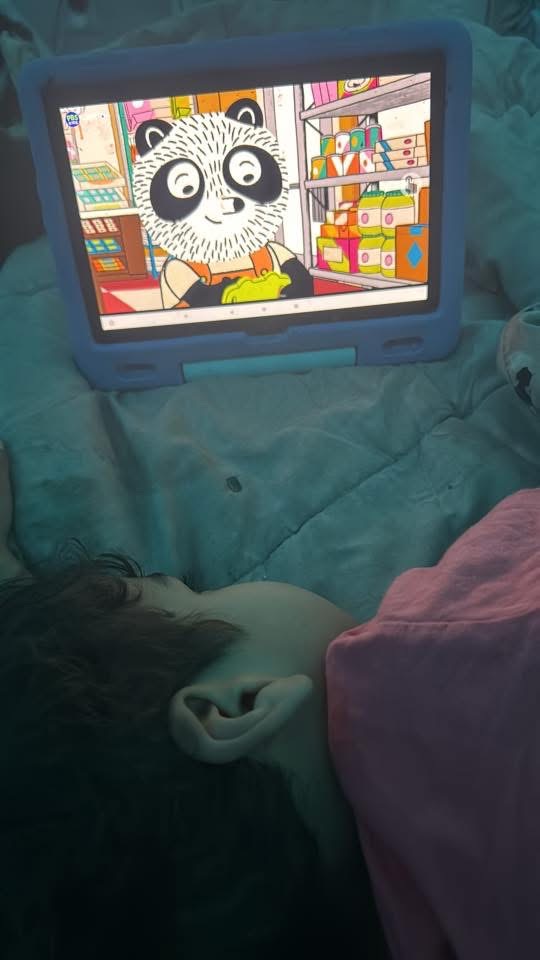
Keenan Isom watching Carl the Collector.
PBS KIDS works with child development experts and educators to support critical skills like problem solving, emotional growth, mathematics and life skills. It’s also been proven to increase children’s early literacy skills, like vocabulary development.
Knowing PBS KIDS is a proven educational tool has taken a weight off parents like Anne and Diana. That’s why, when both women learned PBS might go away in Alabama, they were ready to show up to defend it.
Back in November, the Alabama Educational Television Commission, the board that governs Alabama Public Television (APT), added cutting ties with PBS to the November 2025 meeting agenda. Diana was immediately worried.
“I'm like, oh no. This cannot happen…I'm a single mom. I can't afford cable. I would be stuck with just YouTube…PBS KIDS, that’s completely free,” she said.
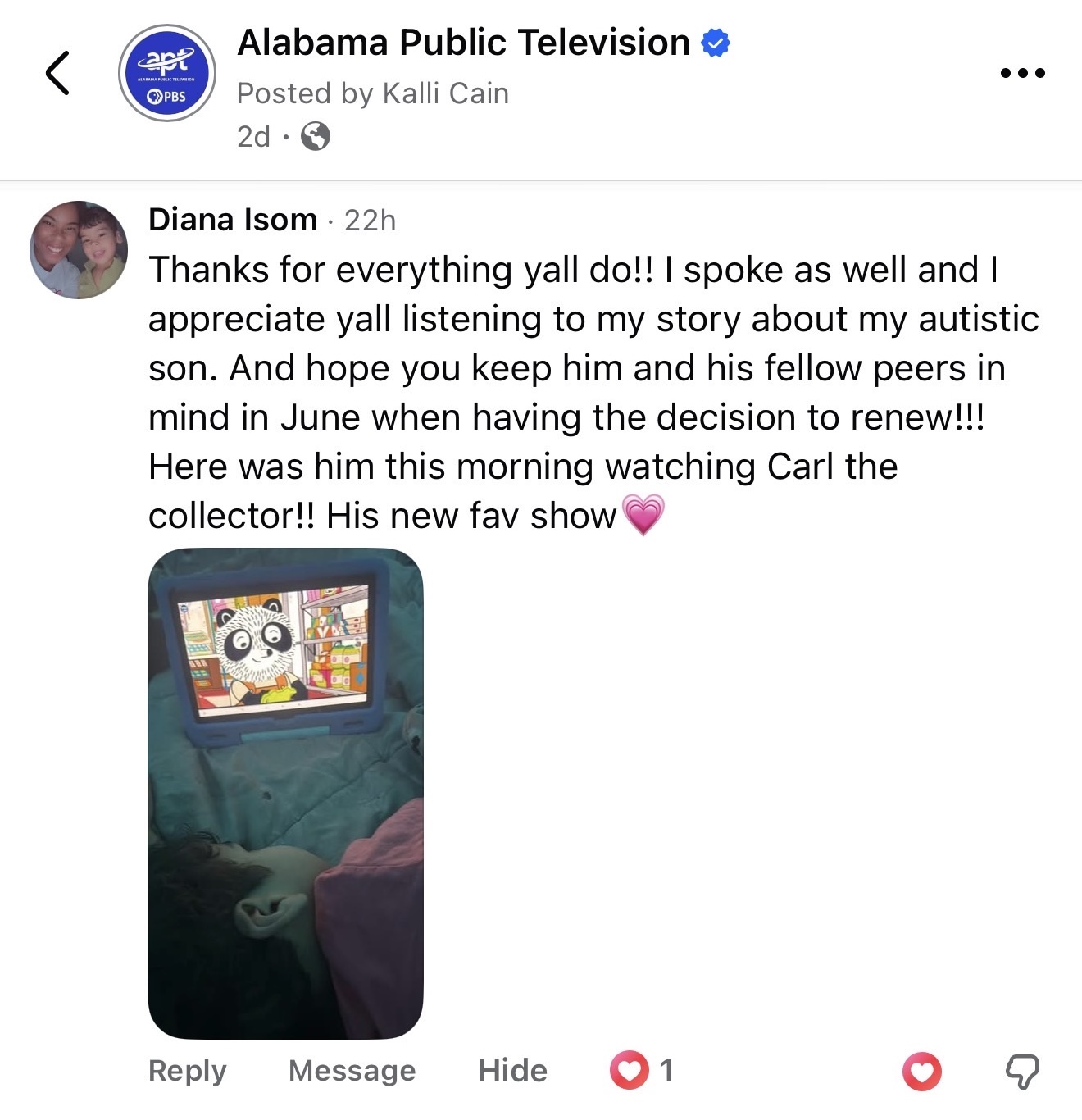
A comment from Diana Isom after the public November 2025 AETC meeting
APT's board voted in April 2026 to continue with PBS programming and also to survey the public about what they want from their public media station in the future.
“I see a lot of people use PBS KIDS for educational purposes, to help their kid to read. And that's what I've been doing with Keenan…” Diana told me when I asked about the meeting. “Just watch the show, and you will see the magic. You will see how kind they are, how it's all about educating kids for the better, for them to be shaped into better humans.”
Watch PBS KIDS 6:30 a.m. to 3 p.m. weekdays on APT or anytime on the PBS KIDS App. And check PBS KIDS for Parents for support from caretakers and educators for kids on the autism spectrum.



Follow Us