
WEDNESDAY, APRIL 15 at 8:00pm
More than half a century after American astronauts last walked on the Moon, NASA is taking the dream of Apollo a step further. In the years ahead, the Artemis missions—named for Apollo’s twin sister in Greek mythology—aim to return astronauts to the Moon and establish a lunar base for scientific and commercial exploration. The award-winning PBS science series NOVA follows NASA’s Artemis missions to bring astronauts back to the Moon, including the latest footage from the Artemis II mission that is currently underway.
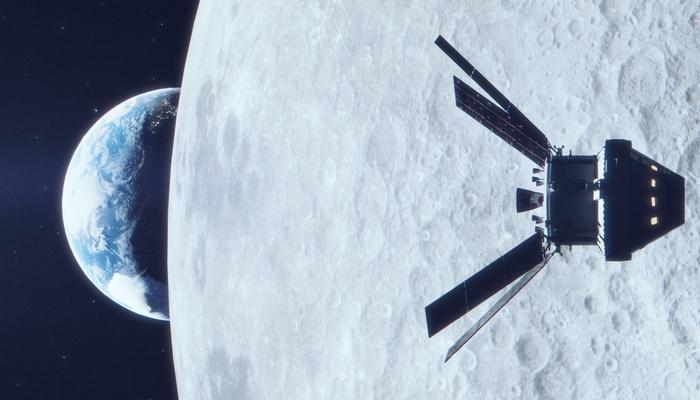
RETURN TO THE MOON follows the four members of the Artemis II crew as they undertake a perilous 10-day journey around the Moon and back, venturing beyond Earth’s orbit for the first time since Apollo and traveling farther into the Solar System than any humans before them. Viewers will get an inside look at the extensive preparations required to overcome the extreme engineering challenges of human spaceflight, as well as follow the Artemis II mission itself from launch to splashdown.
RETURN TO THE MOON explores the design of the new rocket and the significant risks and safety challenges NASA faced in preparing Artemis II for launch. In November 2022, NASA successfully launched Artemis I, an uncrewed mission to the Moon and back and the first real test of the vehicle that will eventually carry humans. The flight served as a critical evaluation of the Space Launch System (SLS), the rocket developed specifically for the Artemis program, and the Orion spacecraft.
The SLS is a multi-stage rocket—the most powerful NASA has ever built—designed to shed weight as each stage completes its role. Its gigantic core stage houses the main engines and fuel tanks, powered by the notoriously leaky liquid hydrogen and oxygen, while the majority of launch thrust is generated by two solid-fuel boosters. Hydrogen provides exceptional thrust efficiency but requires extensive storage space and must be kept at temperatures near –420 degrees Fahrenheit to prevent evaporation and expansion within the tank. The challenge of sustaining these extreme conditions led to fueling issues that twice delayed the Artemis I launch.
As shown in RETURN TO THE MOON, Artemis II was the first crewed test of the spacecraft’s human systems, sending astronauts on a wide looping trajectory more than 4,000 miles beyond the Moon. The mission paved the way for future flights, including Artemis IV, aimed at putting astronauts back on the lunar surface. Building on Apollo’s legacy, Artemis pursues far more ambitious long-term goals – while operating with roughly one-tenth of NASA’s 1960s budget. Rather than simply landing astronauts on the Moon for a few days at a time, Artemis’s goal is to create a long-term Moon base, which could one day become a center of operations for further crewed voyages to Mars … and beyond.
“These are exciting times in human spaceflight,” said the film’s director, Tim Lambert. “Having been confined to Low Earth Orbit for half a century, NASA is dreaming big again – working with commercial partners to establish a sustained human presence on the Moon. Artemis II is the first step on the journey and it is a privilege to have witnessed this mission come into being.”
ALABAMA NASA LEADERSHIP
WOMEN OF TRUE GRIT: WOMEN OF NASA
Women of True Grit’s Edie Hand talks with Jody Singer, Director of NASA’s Marshall Space Flight Center; Dr. Lisa Watson-Morgan, Manager of NASA’s Human Landing System Program; and Lakiesha Hawkins, Deputy Manager (SES) of the Human Landing System Program at NASA. They discuss their work at NASA and provide insight into the development of the Artemis program to return astronauts to the moon.


Follow Us