
TUESDAY, JAN. 6 at 8:00PM
Eighty years after the devastating atomic bombings that ushered in the nuclear age, AMERICAN EXPERIENCE: Bombshell explores how the U.S. government manipulated the narrative about the atomic bombings of the Japanese cities Hiroshima and Nagasaki. Through propaganda, censorship and the co-opting of the press, the government presented a benevolent picture of atomic power, minimizing the horrific human toll of the bombings. Bombshell sheds light on the efforts of a group of intrepid reporters to let the world know the truth.
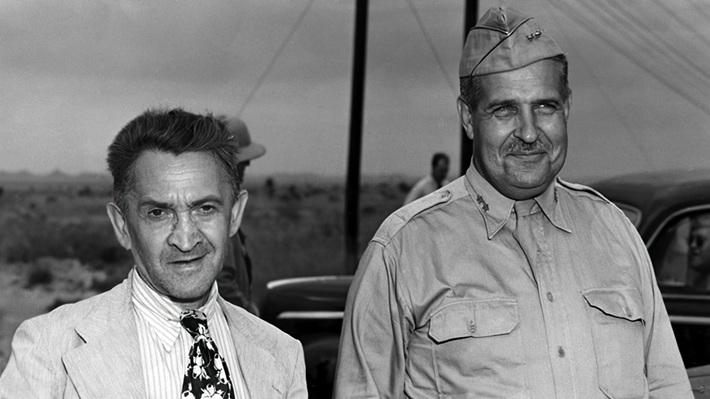
The U.S. media became pivotal in promoting — and then piercing — the official narrative. While Truman publicly declared that “it has never been the habit of the scientists of this country or this government to withhold from the world scientific knowledge,” that is precisely what General Groves, leader of the Manhattan Project, insisted upon. His strategy was a PR campaign fueled by press releases written anonymously by William L. Laurence, the science writer for The New York Times and an undercover member of the Manhattan Project team. Laurence’s assignment: downplay the radiation effects from the bomb.
Not every journalist adhered to the official line. First on the ground in Hiroshima was Japanese American Leslie Nakashima, who had worked for the United Press in Tokyo until Pearl Harbor. After the bombing, he rushed to Hiroshima to check on his mother. She was safe, but the devastation stunned him. Although the United Press syndicated his story, many American papers censored it, including The New York Times, which removed all references to radiation poisoning. An accompanying warning by General Groves told readers that all reports out of Japan “are pure propaganda.”
The official narrative finally began to crack in August 1946 when John Hersey’s article on Hiroshima was published as an entire issue of The New Yorker. While Groves and Laurence presented a benevolent spin on atomic power, Hersey’s reporting revealed the enormous moral and human consequences. The issue sold out overnight and the article was reprinted around the world. The Truman administration doubled down on its efforts to sell its official story, including a government-approved Hollywood movie, The Beginning or the End.
Bombshell sheds light on the efforts of courageous journalists to inform the world about the human costs of nuclear weapons, despite government censorship. On the 80th anniversary of the bombings, their long-overlooked but crucial perspective underscores the essential role of journalists in telling the story of the atomic bomb.
Bombshell is the final production of the decades-old AMERICAN EXPERIENCE series which has been put on hiatus due to the loss of federal funding for public media. Many earlier episodes of the series will be broadcast this year as part of our celebration of America’s 250th anniversary.


Follow Us